Three ways in. Almost everyone starts with the Scan.
It is short, it is concrete, and it tells us both whether there is real work to do before anyone commits to a programme.
AI Adoption Readiness Scan
Before asking people to change how they work, it helps to understand what they are being asked to change into. The Scan measures the human, organisational and work design conditions that decide whether AI adoption holds.
Everyone who takes part answers a short set of questions calibrated to their role, because readiness means something different for a function head than it does for someone closer to the day to day work. Each person gets their own reflection back. Leaders get the aggregated picture, including where the view from different levels of the organisation has diverged.
Seven readiness dimensions
Leadership clarity and AI direction
Do people understand why AI is being introduced, what success looks like, and how it connects to real work?
Psychological safety and learning climate
Can people ask basic questions, admit uncertainty, raise concerns and give honest feedback?
Role impact and emotional readiness
Are changes to roles, skills, expectations and future relevance being handled honestly and constructively?
AI literacy, capability and use case confidence
Do people have enough knowledge, guidance, support and practical confidence to engage with AI meaningfully?
Change readiness and capacity
Is AI adoption treated as real work change, or as another initiative added on top of everything else?
Work redesign and human capability
Are teams clear on where AI supports work, where human judgement remains critical, and how workflows may change?
Responsible use, governance and trust
Do people understand the rules, the boundaries, the escalation routes and the decision process around AI use?
AI adoption does not fail only because people resist it. More often it stalls because people are unclear, unsupported, unconvinced, overloaded, or unsure whether it is safe to engage honestly. The Scan helps leaders see those conditions early.
The standard Scan is non-named by default. It is a readiness diagnostic, not a performance assessment.
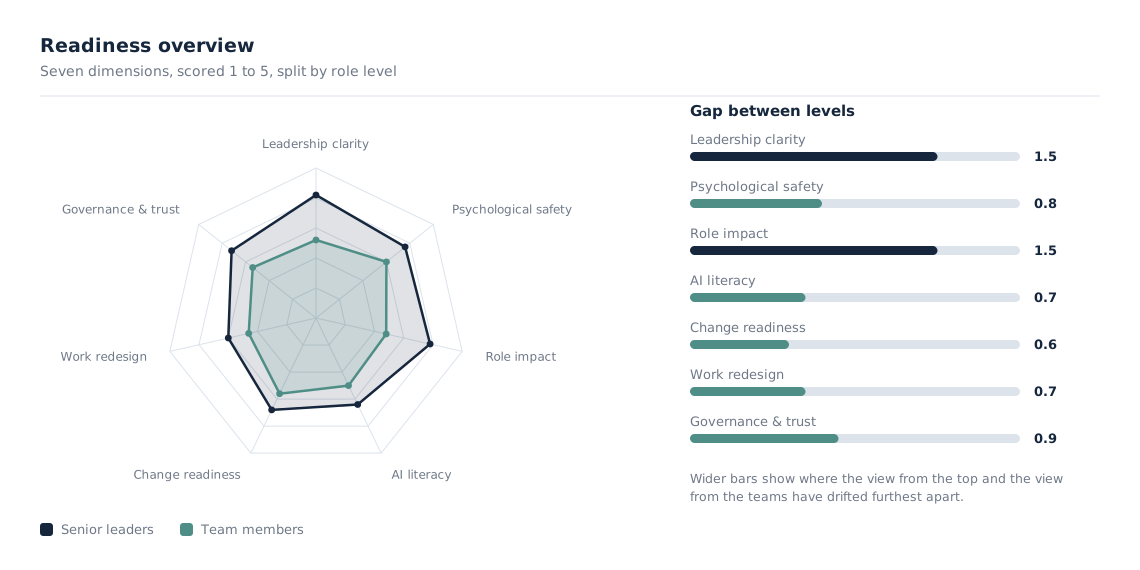
Illustrative example of the leader dashboard. Placeholder values, not client data.
How it runs
Kick off and scope
Agree the purpose, the population, timelines, roles and what a good outcome looks like.
Set up
Configure the organisation structure, adoption phase and role paths so the questions fit your context.
Launch and participation
Invite people, explain clearly why this is happening, and collect responses. Around fifteen minutes each.
Analysis
Individual and aggregated results reviewed for patterns, gaps and the risks most likely to affect adoption.
Debrief
A facilitated session with your leadership team. Findings, priority risks, and what they mean in practice.
Next steps
Agree the actions worth taking, who owns them, and the path forward.
Typically four to six weeks from scoping to debrief.
What leaders get
A clearer adoption baseline
Where the organisation really stands, before pushing more tools, pilots or use case campaigns.
A stronger workforce signal
Whether people are curious, cautious, unsupported, ready to contribute, or holding back.
A role based view of readiness
How senior leaders, function leads, team leads and team members each experience adoption.
A practical risk map
The readiness issues most likely to affect trust, value and the ability to scale.
A better debrief conversation
Moving from "people need training" to what is actually missing: clarity, confidence, governance, capacity or work redesign.
Use it before adoption gets expensive to fix.
The Scan is most useful at a decision point, when there is still a choice to make about what happens next. After a rollout has already stalled it still works, it just costs more to act on what it finds.
When it is worth doing
- Exploring AI and unsure where to start
- Collecting AI use cases from teams
- Preparing for a Copilot or productivity tool rollout
- Piloting AI in one function or process
- Scaling tools that are already in place
- Concerned about trust, role impact or adoption risk
- Wanting to know whether leadership intent is landing
- Planning the next phase and needing a baseline first
Who usually brings us in
Almost always someone who owns the outcome rather than the tool.
- Senior leaders and AI programme sponsors
- Transformation and change leads
- GBS and shared services leaders
- HR, people and culture leaders
- Function heads preparing teams for AI-enabled work
Three questions, answered with evidence
Are people personally ready to engage with AI?
Is the organisation creating the right conditions for adoption?
What should leaders do next, before pushing AI further?
The Adoption Programme
Twelve weeks to act on what the Scan found, working with your teams rather than around them. Four things get built, in the order that makes them stick.
Use case definition and prioritisation
Mapping work across functions into what AI can own end to end, what it should support while people keep judgement and accountability, and what stays human regardless of what the technology can do. Getting this wrong is one of the most common reasons AI investment lands in the wrong place.
Leadership AI literacy
The most underestimated lever in any AI programme. Leaders who can answer a real question from their team, rather than repeat the strategy, move adoption faster than any frontline training alone.
Role and workflow redesign
Redesigning how the work actually flows once part of it is done differently. Roles get clearer, not vaguer, and people can see where they add value.
Governance and responsible use
Rules people can find, understand and use. Where the boundaries sit, who decides, how someone raises a concern. Governance that lives only in a policy document is not governance.
Retained advisory
For leadership teams already moving who want a steady outside read as things develop.
Executive coaching
One to one work with leaders carrying the weight of this change. Practical, confidential, focused on the decisions in front of them.
Team upskilling
Capability built deliberately rather than assumed. Matched to the tools your people actually use, not a generic curriculum.
Adoption measurement
A quarterly rebaseline so you can see whether adoption is deepening or drifting, and act while it is still cheap to correct.
On pricing
Scope varies with organisation size, how much is already deployed and how many teams are involved, so a price list here would be fiction. Bring us what you are dealing with and we will give you a real number on the call.